
Customize Your Goals, Your Way

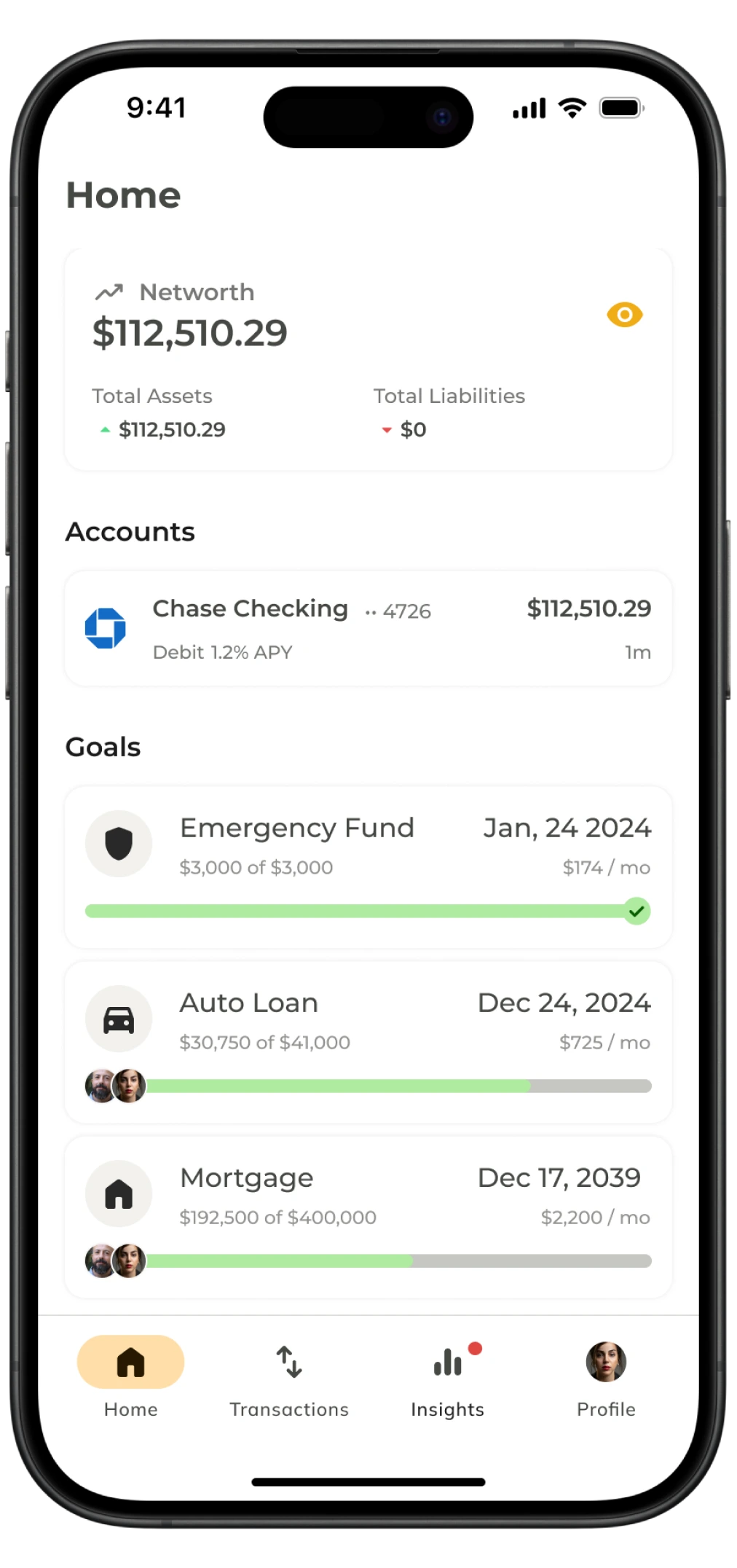
Create goals that reflect your life—pay off debt, build an emergency fund, or save for your next big milestone—and invite contributors by email when you’re working toward something together.

Financial goals overviewCustom goal cards

Create goals for what matters most

  • Set goals to become debt-free, build savings, or plan for major purchases.
  • Name each goal and choose what you're working toward—from a first home to a dream vacation.
  • Keep multiple goals organized in one place so nothing falls through the cracks.
  • Add contributors to any goal by inviting them via email—ideal for partners, roommates, or friends saving for the same milestone.

Target

MonthlyAnnually
May 01 - 30Remaining / Target
Spend

$0 / $0

Save

$0 / $0

Overview

Net worth

$0.00 USD

Total Assets1
$0.00
Total Liabilities0
-$0

Accounts

Chase Checking .. 4726

Debit · 1.2% APY

$0.001m

Goals

View All

Emergency Fund

Jan, 24 2024

$3,000 of $3,000 saved

Auto Loan

Dec 24, 2024

$30,750 of $41,000 saved

Personalize targets and timelines

  • Set your target amount and adjust contributions until the plan feels realistic.
  • Pick a target date and see how small changes affect when you'll reach your goal.
  • Customize monthly targets so saving fits your budget—not the other way around.
Goal progress cardsGoal progress tracking

Track progress and stay on course

  • Watch your progress update as you save, so you always know how close you are.
  • Adjust goals when life changes—without starting from scratch.
  • Celebrate milestones along the way and keep momentum toward your next target.

Choose a goal that fits your plans

A goal can represent a near-term purchase, a longer savings target, or paying down debt. Give it a name that makes the purpose clear, such as an emergency fund, a home deposit, or a trip. Keeping separate plans as separate goals helps you see what each contribution is meant to support.

If someone else is saving toward the same outcome, invite them to contribute to the goal. A shared target can make responsibilities clearer: each person can see the goal and the progress being made without having to combine every part of their financial life.

Set a target and make the timeline realistic

Choose an amount and a target date, then review the contribution pace the plan implies. If the monthly amount does not fit your current budget, move the date or adjust the target until the plan feels workable. A date is a planning input, not a guarantee that future income or expenses will stay the same.

You can keep more than one goal active at a time. Looking at them together can help you decide how to divide available savings instead of treating every milestone as if it had the same deadline or priority.

Keep the plan current as life changes

Progress is easier to interpret when the target still reflects what you need. Revisit a goal after a major expense, a change in income, or a new date. Updating the target lets the plan reflect your current situation without discarding the history of what you have already saved.

Use the progress view to check how far you have come and what remains. If a milestone feels distant, break the next step into a contribution you can make this month, then review the timeline again as your circumstances change.

Common questions

Can I invite another person to a goal?

Yes. You can invite contributors by email so partners, family, or friends can work toward a shared savings target.

Can I change the amount or target date?

Yes. Update a goal when your plan changes, then use the new amount and date to review a realistic contribution pace.

Can a goal be used for debt payoff?

The goal planner supports debt-payoff targets alongside savings and other life milestones.

Start Customizing Your Goals Today.

Get Started